





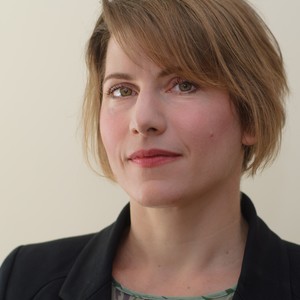
Pamela K. Smith
- Media Contact
- SPN Mentor
My research focuses on power: the degree to which one person has more control over valued resources than another. My areas of interest are the effect of power on people’s thinking, motivation, and behavior, and the subtle signals and signs people use to determine how much power they and others have. This work is strongly influenced by my fundamental interest in nonconscious processes more generally. In particular, I study how individuals’ sense of their own and others’ power affects even processes below the level of awareness. My work highlights how the inherently social construct of power has a multitude of internal psychological effects. Thus, throughout my research I study the interplay between interpersonal and intrapersonal phenomena.
Primary Interests:
- Interpersonal Processes
- Motivation, Goal Setting
- Persuasion, Social Influence
- Social Cognition
Note from the Network: The holder of this profile has certified having all necessary rights, licenses, and authorization to post the files listed below. Visitors are welcome to copy or use any files for noncommercial or journalistic purposes provided they credit the profile holder and cite this page as the source.
Journal Articles:
- Dijksterhuis, A., Smith, P. K., Van Baaren, R. B., & Wigboldus, D. H. J. (2005). The unconscious consumer: Effects of environment on consumer behavior. Journal of Consumer Psychology, 15, 193-202.
- Johnson, C. S., Smith, P. K., & Wang, C. (in press). Sage on the stage: Women’s representation at an academic conference. Personality and Social Psychology Bulletin.
- Karremans, J. C., & Smith, P. K. (2010). Having the power to forgive: When the experience of power increases interpersonal forgiveness. Personality and Social Psychology Bulletin, 36, 1010-1023.
- Magee, J. C., & Smith, P. K. (2013). The social distance theory of power. Personality and Social Psychology Review, 17, 158-186.
- Oveis, C., Spectre, A., Smith, P. K., Liu, M. Y., & Keltner, D. (2016). Laughter conveys status. Journal of Experimental Social Psychology, 65, 109-115.
- Smith, P. K., & Bargh, J. A. (2008). Nonconscious effects of power on basic approach and avoidance tendencies. Social Cognition, 26, 1-24.
- Smith, P. K., Dijksterhuis, A., & Chaiken, S. (2008). Subliminal exposure to faces and racial attitudes: Exposure to Whites makes Whites like Blacks less. Journal of Experimental Social Psychology, 44, 50-64.
- Smith, P. K., Dijksterhuis, A., & Wigboldus, D. H. J. (2008). Powerful people make good decisions even when they consciously think. Psychological Science, 19, 1258-1259.
- Smith, P. K., & Galinsky, A. D. (2010). The nonconscious nature of power: Cues and consequences. Social and Personality Psychology Compass, 4, 918-938.
- Smith, P. K., & Hofmann, W. (in press). Power in everyday life. Proceedings of the National Academy of Sciences.
- Smith, P. K., Jostmann, N. B., Galinsky, A. D., & van Dijk, W. (2008). Lacking power impairs executive functions. Psychological Science, 19, 441-447.
- Smith, P. K., & Magee, J. C. (2015). The interpersonal nature of power and status. Current Opinion in Behavioral Sciences, 3, 152-156
- Smith, P. K., McCulloch, K. C., & Schouwstra, A. (2013). Moving closer to reach the top: Approach behavior increases one’s sense of power. Social Cognition, 31, 518-529.
- Smith, P. K., Smallman, R., & Rucker, D. D. (2016). Power and categorization: Power increases the number and abstractness of categories. Social Psychological and Personality Science, 7, 281-289.
- Smith, P. K., & Trope, Y. (2006). You focus on the forest when you're in charge of the trees: Power priming and abstract information processing. Journal of Personality and Social Psychology, 90, 578-596.
- Smith, P. K., Wigboldus, D. H. J., & Dijksterhuis, A. (2008). Abstract thinking increases one's sense of power. Journal of Experimental Social Psychology, 44, 378-385.
- Stel, M., van Dijk, E., Smith, P. K., van Dijk, W. W., & Djalal, F. M. (2012). Lowering the pitch of your voice makes you feel more powerful and think more abstractly. Social Psychological and Personality Science, 3, 497-502.
- Wakslak, C. J., Smith, P. K., & Han, A. (2014). Using abstract language signals power. Journal of Personality and Social Psychology, 107, 41-55.
Other Publications:
- Dijksterhuis, A., Aarts, H., & Smith, P. K. (2005). The power of the subliminal: On subliminal persuasion and other potential applications. In R. R. Hassin, J. S. Uleman, & J. A. Bargh (Eds.), The new unconscious (pp. 77-106). New York: Oxford University Press.
- Smith, P. K., & Overbeck, J. R. (2014). The leaders’ rosy halo: Why do we give powerholders the benefit of the doubt? In J.-W. van Prooijen & P. A. M. Lange (Eds.), Power, politics, and paranoia: Why people are suspicious about their leaders (pp. 53-72). Cambridge, UK: Cambridge University Press.
Courses Taught:
- Conscious and Unconscious Processes
- Organizational Behavior
- Power and Influence
- Social Cognition
Pamela K. Smith
Rady School of Management, Otterson Hall
University of California, San Diego
9500 Gilman Drive, #0553
La Jolla, California 92093-0553
United States of America
- Phone: (858) 822-7472